
Introduction
The tortellinatrice is a special tortellini making machine. This pasta forming equipment lets you make filled pasta faster and better. It is essential in filled pasta production, whether at home, in a restaurant, or in a factory.
What Is a Tortellinatrice?
A tortellinatrice is a dedicated pasta machine. It automates the steps of rolling dough, depositing filling, folding, sealing, and cutting ring‑shaped tortellini. The word comes from “tortellini” plus the Italian suffix “‑atrice”. It is designed just for made‑to‑shape tortellini.
History and Cultural Significance
This tool comes from Italy’s Emilia‑Romagna region: the birthplace of tortellini . Tortellini began as a hand‑made tradition during festivals and family gatherings. The tortellinatrice kept that heritage alive while speeding up production.
How the Tortellinatrice Works (Pasta Forming Equipment Steps)
A pasta forming equipment works in stages:
- Dough feeding and rolling – Flattens the dough to even thickness.
- Filling hopper – Deposits measured filling like cheese, meat, or vegetables.
- Folding and cutting – Shapes and seals the tortellini with a ring form.
- Output conveyor – Collects finished tortellini, often dusted with flour to prevent sticking.
Types: Manual, Semi‑Automatic and Fully Automatic Models
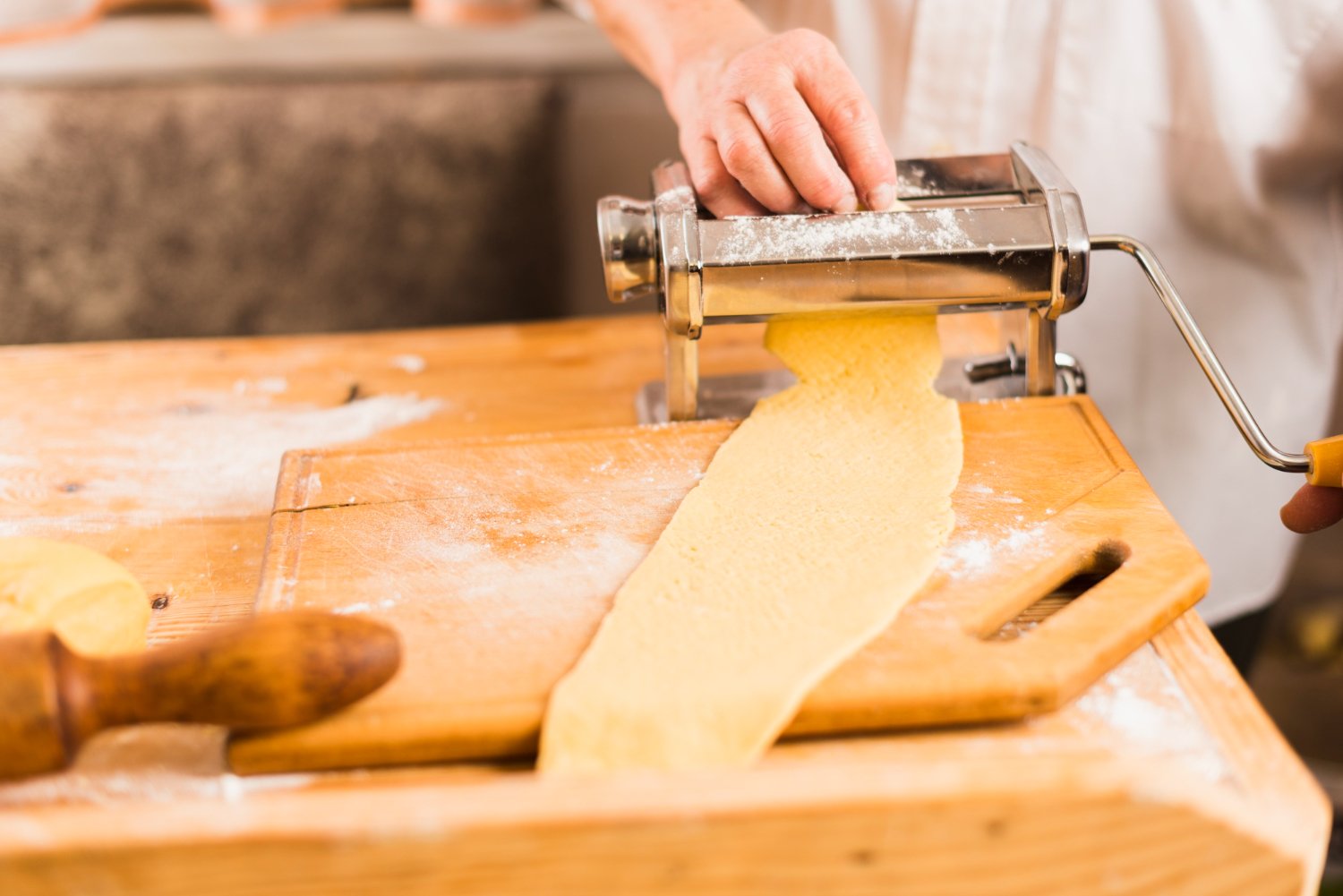
Manual tortellinatrice: Cranked by hand. Good for home cooks. Low cost, small size, more control.
Semi‑automatic models: Dough sheet often fed manually, but filling, folding, and shaping are semi‑automated. Ideal for small shops.
Automatic tortellini machine: Fully automated. Rolls dough, deposits filling, folds, seals, cuts and collects – all at high speed.
Advantages of Using a Tortellinatrice
Using a tortellini making machine brings many benefits:
- Speed: Can produce hundreds or thousands of tortellini per hour versus manual work.
- Consistency: Each piece has the same size, shape, and filling amount.
- Efficiency: Reduces manpower and time in filled pasta production.
- Ease of use: New users can quickly master even complex recipes.
- Hygiene: Most machines are stainless steel and easy to clean, essential in a commercial kitchen.
Who Uses a Tortellinatrice?
Artisan pasta shops: To make authentic tortellini in batches without sacrificing quality.
Restaurants and caterers: For reliable, uniform pasta during peak service times.
Industrial pasta producers: For mass production of filled pasta in frozen or fresh formats.
Home chefs and small kitchens: Manuals or small semi‑automatic models offer control and tradition.
Choosing the Right Model
Key considerations:
- Production volume: Small batch vs. high volume.
- Space and budget: Manual units cost less and need less room. Automatic units cost more and need more space.
- Filling types: Some machines handle thick, chunky fillings poorly.
- Cleaning and hygiene: Easily disassembled, stainless steel models are best.
- Customization: Some models allow changing the size or shape of tortellini.
Tips for Best Results
- Use fresh ingredients: High‑quality flour and eggs give better dough texture.
- Rest dough before using: Let gluten relax for easier rolling and shaping.
- Don’t overfill: Use a small filling amount so seals stay tight.
- Dust surfaces lightly with flour for smooth operation.
- Practice makes perfect: The more you use the tortellinatrice, the better results you’ll get.
Conclusion
The tortellinatrice is powerful pasta forming equipment that brings together tradition and modern efficiency. Whether you use a manual, semi‑automatic, or automatic tortellini machine, you get uniform, high‑quality tortellini at scale. It’s an investment that saves time, reduces labor, and keeps the authentic charm of filled pasta.
If you value consistency, speed, and flavor, a tortellinatrice is worth considering. It supports all aspects of filled pasta production—from dough to plate.
Frequently Asked Questions
1. What is the difference between a tortellinatrice and a ravioli machine?
A tortellinatrice folds, seals, and shapes pasta into ring‑shaped tortellini. Ravioli machines make flat square or round pasta parcels. The folding mechanism differs significantly.
2. Can I use a tortellinatrice at home?
Yes. Small manual or semi‑automatic models exist for home kitchens. They offer control and tradition at a lower cost.
3. What fillings work best?
Smooth, non‑chunky mixtures like ricotta, meat purée, or cheese blends work best. Chunky fillings can jam the hopper or cause uneven seals.
4. How fast can a tortellinatrice work?
Manual models produce a few dozen per hour. Semi‑automatic and automatic machines can make hundreds to thousands in the same time frame.
5. How do I clean it?
Disassemble food‑contact parts daily. Clean with warm soapy water, dry well, and follow manufacturer instructions for maintenance.
For More Visit: Lawire.co.uk